
What Makes Thai Massage SO Different
Not all massages are created equal.
Most people think they know what massage is: you lie face down on a table, someone rubs oil on your back, works on a few tight spots, and an hour later you walk out feeling relaxed. That’s the standard experience most of us have had in spas and clinics.
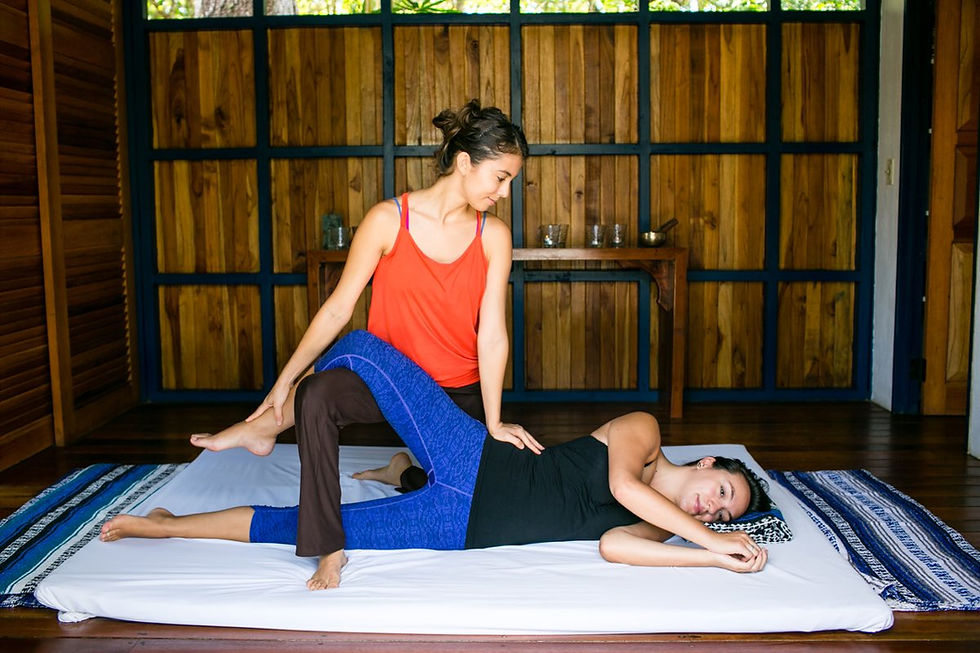
But there’s another style of bodywork that feels completely different the moment it starts.
It doesn’t rely on oils.You’re not just lying there passively.And instead of simply rubbing muscles, the therapist moves your entire body through deep stretches, pressure techniques, and flowing transitions that feel almost like assisted yoga.
When people experience it for the first time, the most common reaction is:“I’ve never had a massage like that before.”
So what exactly makes this type of massage so different?
Let’s find out.
It Works With The Entire Body, Not Just Muscles
Many massage styles focus primarily on muscle tissue. The therapist works knots, releases tension, and increases circulation in specific areas.
That’s useful—but it’s only part of the picture.
This style of massage looks at the body as a complete system. Muscles, joints, fascia, nervous system, breathing patterns, posture, and mobility are all connected. If one part is restricted, the rest of the body compensates.
Instead of isolating muscles, the practitioner works along long chains of movement throughout the body.
A stretch in the hips may release tension in the lower back.Opening the chest can change how the neck and shoulders feel.Mobilizing the spine can improve the way the entire body moves.
The goal isn’t just to relax muscles. It’s to restore movement.
Assisted Stretching Changes Everything
One of the most noticeable differences is the stretching.
Most people stretch themselves at the gym or after a workout, but self-stretching has limits. When you’re doing the stretch, you’re also the one stabilizing the body. That means your muscles are always working a little.
With assisted stretching, the therapist moves your body while you stay relaxed.
That allows stretches to go deeper, smoother, and often much more effectively.
Your hips open further.Your spine rotates more freely.Your shoulders finally move the way they’re supposed to.
For athletes, active people, or anyone who sits at a desk all day, this can be a completely different experience from a typical massage.
Many clients say it feels like a combination of massage, yoga, and mobility training all in one session.
There’s A Flow To The Entire Session
Another major difference is the rhythm.
Many massages work area by area: back, shoulders, legs, arms, neck.
This style works differently.
The session flows continuously from one movement to the next. The therapist transitions smoothly between compression, stretching, rocking, and joint mobilization techniques.
Instead of isolated treatment, it feels more like a sequence.
There’s a rhythm to it.
Pressure releases tension.Stretch opens the joint.Movement restores circulation.Then the body shifts into the next position.
That flow keeps the nervous system calm and engaged at the same time.
By the end of the session, most people don’t just feel relaxed—they feel reset.
It Improves Mobility, Not Just Relaxation
Relaxation is great, but for many people the real benefit is mobility.
Modern life creates stiff bodies. Long hours sitting, repetitive workouts, poor posture, and stress all build restrictions in the joints and connective tissues.
Traditional massage can help loosen muscles, but it doesn’t always address how the body moves.
This method does.
Hips rotate.The spine twists.Shoulders open.Hamstrings lengthen.The ribcage expands with deeper breathing.
Clients often stand up after the session feeling taller, lighter, and more mobile.
It’s the difference between loosening a tight rope and restoring full range of motion to a hinge.
It Works With The Nervous System
One of the most overlooked aspects of bodywork is the nervous system.
When your body is under constant stress, the nervous system stays in a heightened state. Muscles tighten, breathing becomes shallow, and recovery slows down.
Deep pressure alone doesn’t always solve that.
This massage combines rhythmic compression, gentle rocking movements, and controlled stretching. Those techniques help shift the body into a parasympathetic state—the “rest and recover” mode.
When that happens, several things change:
Muscles release tension more easily.Breathing deepens.Circulation improves.The body becomes more receptive to treatment.
That’s why many people feel not only physically better after the session, but mentally clearer as well.
You Stay Fully Comfortable And Supported
Another difference people notice right away is the setup.
Instead of lying on a massage table covered in oil, sessions are often done on a comfortable mat with loose clothing. That allows the therapist to move your body more freely through stretches and positions.
You’re always supported, guided, and stabilized.
There’s no need to “perform” the stretches yourself. You simply relax and allow the movements to happen.
For many clients, this creates a deeper sense of ease during the session.
It’s Great For Active People
Athletes and fitness enthusiasts often respond especially well to this kind of bodywork.
Training builds strength, but it can also create tightness and movement restrictions over time. Heavy lifting, running, cycling, and high-intensity workouts all place repetitive stress on the body.
This massage helps balance that out.
It lengthens tight muscles.Improves joint mobility.Encourages better movement patterns.And supports faster recovery.
Many clients use it as part of their training routine, just like stretching, mobility work, or recovery days.
It Can Feel Surprisingly Energizing
Most massages leave you feeling relaxed and maybe a little sleepy.
This one can feel different.
Because the body is moved through stretches and mobilizations, many people feel energized afterwards rather than drowsy.
Your joints move more freely.Your breathing feels deeper.Your posture improves.Your body simply feels lighter.
It’s not uncommon for clients to walk out feeling like they just finished a great mobility session.
Relaxed—but also awake and refreshed.
The Experience Is Hard To Compare
The truth is, it’s difficult to fully describe until you experience it.
It combines elements of several different practices:
Massage therapyYoga-style stretchingJoint mobilizationBreath awarenessRhythmic bodywork
But the result feels like something unique.
For some people, it becomes their preferred form of bodywork because it does more than just ease tension—it improves how their body moves and feels day to day.
The Real Difference
At its core, what makes this massage different is simple:
It doesn’t just work on the body.It works with the body.
Through movement, stretching, and rhythmic pressure, the session helps restore the natural mobility and balance your body is designed to have.
And when that happens, the results go far beyond relaxation.
People feel stronger in their posture.Freer in their movement.And more connected to their body overall.
That’s the difference people notice immediately.
And it’s why once someone experiences it, they rarely see massage the same way again.
Join us and get certified in authentic Thai Yoga Massage right here at Thai Yoga Massage School Of Canada. See our L1 or TST certiification courses today.


Comments